Digital Design in 2025 – An Overview
Design is never static. Every year brings new trends – some are short-lived fads, others permanently change the way we create digital products. 2025 is defined by AI integration, hyperpersonalization and a return to authentic, human aesthetics.
According to the Nielsen Norman Group UX Trends Report, three macro trends are influencing design in 2025 the most: the integration of AI into user interfaces, the increasing importance of accessibility (driven by the European Accessibility Act) and the return to craftsmanship quality in visual design. For Swiss businesses, these trends are particularly relevant because the Swiss market has high quality expectations for digital products.
Trend 1: AI-Native Interfaces
AI is no longer just a backend feature – it's becoming part of the UI itself. Chatbots, assistants and generative elements are integrated directly into the user interface. Designing these interfaces requires entirely new approaches: How do you manage expectations for AI responses? How do you visualize uncertainty? How do you make AI-generated content recognizable as such?
Practical Implications for Swiss Websites
For business websites, this concretely means: AI-powered chatbots with consistent visual style and clear labeling as AI, context-dependent content that adapts to user preferences, and "Smart Forms" that transform complex forms (e.g., quote requests, configurations) into natural conversations.
An example: Instead of a traditional contact form with 15 fields, an AI-powered conversational interface can capture the relevant information in a natural dialogue – the conversion rateDie Conversion Rate misst, wie viel Prozent Ihrer Website-Besucher eine gewünschte Aktion ausführen — z.B. ein Formular ausfüllen, ein Produkt kaufen oder…Mehr erfahren → increases by 20–40% compared to traditional forms, according to our experience.
Trend 2: Honest, Authentic Aesthetics
As a reaction to overproduced, AI-generated stock images, designers are consciously seeking authenticity. Real photos of real people and real work environments, imperfect textures, hand-drawn illustrations and organic shapes – the opposite of artificial perfection.
This movement is particularly relevant for Swiss brands: In a culture that values quality, craftsmanship and trust, authentic visual elements have a stronger impact than polished stock photos. A Zurich-based craft business that shows real workshop photos communicates competence and trustworthiness – generic stock photos of smiling people in offices achieve the opposite.
Concrete Implementation Tips
Invest in a professional photo shoot (CHF 1,500–3,000 for an SME) instead of stock photos. Use real team photos, office photos and project documentation. If illustrations are needed, commission an illustrator for an individual style instead of using generic vector icons.
Trend 3: Hyperpersonalization Through Data
Websites that adapt to the user – based on time of day, location, device, language and previous behavior – are no longer a vision of the future. A/B testingA/B Testing (Split Testing) ist eine Methode, bei der zwei Varianten einer Webseite, Anzeige oder E-Mail an verschiedene Nutzergruppen ausgespielt werden, um…Mehr erfahren → is evolving into multi-variant personalization. For Swiss companies with multilingual target audiences, language-based personalization alone offers considerable potential.
Examples of meaningful personalization on Swiss websites: language-specific content based on browser locale (de-CH, fr-CH, it-CH), location-based branch information, time-of-day-dependent greetings and offers, and returning visitors with personalized recommendations based on previous behavior.
Trend 4: Dark Mode and Adaptive Themes
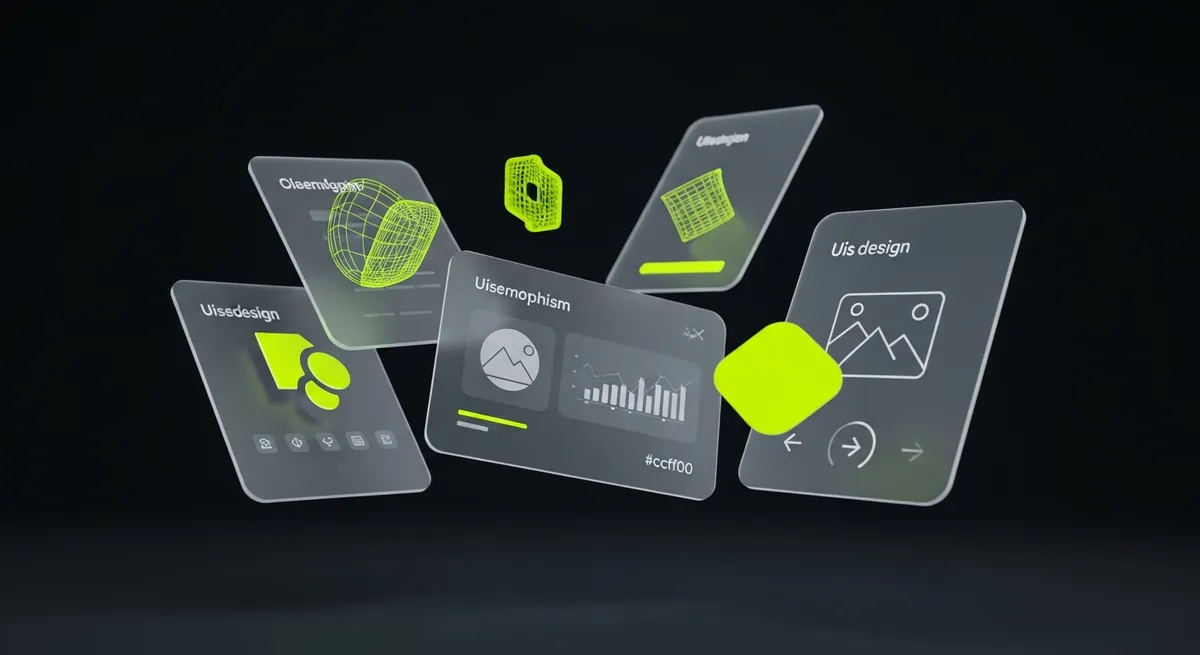
Dark Mode is now standard, no longer optional. Modern websites offer system-controlled theme adaptation (prefers-color-scheme) and go beyond simple color inversion. Design systems must fully support both modes – with independent color palettes, adjusted contrasts and optimized images for both modes.
In practice, this means: Every color in the design system needs a dark mode equivalent. Images with transparent backgrounds must work in both modes. Shadows become glows in dark mode. And text contrasts must meet WCAGDie Web Content Accessibility Guidelines (WCAG) sind der internationale Standard des W3C für barrierefreie digitale Inhalte. Sie ordnen alle Anforderungen vier…Mehr erfahren → AA requirements (contrast ratio 4.5:1) in both modes.
Trend 5: Micro-Interactions and Meaningful Animations
Animations are returning – but thoughtfully. Instead of overloaded page transitions, 2025 is about precise, meaningful micro-interactions: buttons that respond to hover and provide visual feedback, progress indicators that provide orientation in multi-step processes, hover states that convey additional information rather than just decorating, and smooth scroll animations that guide the user's gaze.
GSAP with ScrollTrigger is the tool of choice for complex scroll animations, while CSS transitions and the Web Animations API are sufficient for simpler micro-interactions. Important: Respect the prefers-reduced-motion setting and offer a reduced variant for users who have disabled animations.
Trend 6: Accessibility as a Design Standard
With the European Accessibility Act (EAA), which takes effect from June 2025, accessibility becomes mandatory in the EU for many digital products and services. Although Switzerland is not directly affected, many Swiss companies orient themselves to EU standards – and accessible design is simply good design.
Concrete minimum standards: WCAG 2.1 Level AA, sufficient color contrasts, keyboard navigation for all interactive elements, alt texts for all images and semantic HTML (correct heading structure, ARIA labels where needed).
Trend 7: Bento Grid Layouts
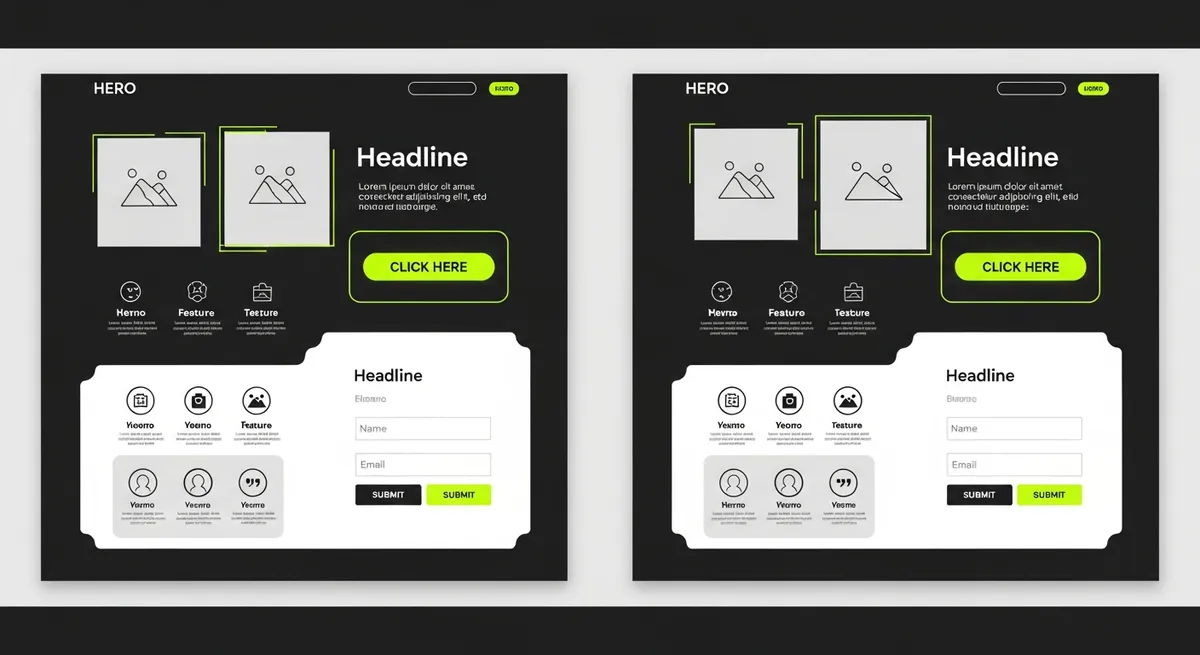
Bento grid layouts – inspired by Apple's keynote presentations – have established themselves as a dominant layout trend in 2024/25. Modular cards in various sizes that fit together like a mosaic offer a visually appealing and flexible way to present diverse content on a page. For Swiss SME websites, this layout is particularly well suited for service overviews, feature comparisons and team pages.
What Remains Constant
Despite all trends: The fundamental principles of good design never change. Clarity over complexity, accessibility for all users, fast loading times and intuitive navigation remain the most important success factors – in 2025 as always. A beautiful design that performs poorly or is hard to navigate loses to a simple design with excellent usability.
Design Trends and Performance: The Balancing Act
Many current design trends – especially scroll-based animations, 3D elements and AI-generated graphics – can significantly impact a website's performance. For Swiss SMEs, it's crucial to find the right balance. A visually impressive website that takes 5 seconds to load on mobile loses customers. According to Google Web Vitals, the Largest Contentful Paint (LCPLCP ist einer der drei Core Web Vitals und misst, wie lange es dauert, bis das grösste sichtbare Element (Bild, Text-Block, Video) einer Seite geladen ist.…Mehr erfahren →) should be under 2.5 seconds – a value that elaborately animated pages often miss. The solution: Progressive Enhancement. Show simplified animations or static fallbacks on low-performance devices. Use the CSS media query prefers-reduced-motion to provide a calmer experience for users with motion sensitivity. Lazy loadingLazy Loading ist eine Technik, bei der Bilder, Videos oder andere Ressourcen erst geladen werden, wenn sie in den sichtbaren Bereich rücken — statt sofort beim…Mehr erfahren → for animations and Intersection Observer APIs ensure that only visible elements are animated.
Design Systems: Consistency as a Competitive Advantage
A growing trend among professional Swiss agencies is the development of design systems – reusable component libraries with defined colors, typography, spacing and interaction patterns. Instead of designing every page individually, teams work with a unified modular system. This saves considerable costs in the long run: New pages are created 50–70% faster, visual consistency increases, and handoffs between designers and developers run more smoothly. Tools like Figma (with Variables and Auto-Layout) and Storybook (for developers) make design systems accessible even for smaller companies. Our recommendation: When redesigning, invest not just in beautiful pages but in a scalable design system that grows with your business.
Trend 8: Emotional Microdesign
Small design details make the difference between a good and an outstanding website. Emotional microdesign includes: subtle hover animations on buttons and links, success animations after form submissions (checkmark animation instead of just "Thank you"), loading animations that match the brand (instead of generic spinners), and Easter eggs for attentive users. These details increase the perceived quality of a website and enhance emotional connection to the brand – a factor that many Swiss SME websites neglect. According to a Forrester study, an improvement in user experience can increase the conversion ratio by up to 400% – microdesign elements play a central role in this.
UX Audit: How to Evaluate Your Current Website
Before implementing trends, you should systematically evaluate the current state of your website. A UX audit includes: Heuristic evaluation (assessment based on Nielsen's 10 heuristics), task analysis (can users efficiently complete their most important tasks?), accessibility check (WCAG 2.1 AA compliance), performance analysis (Core Web Vitals, PageSpeedGoogle PageSpeed Insights ist ein kostenloses Tool, das die Ladegeschwindigkeit und Core Web Vitals einer Website analysiert und auf einer Skala von 0–100…Mehr erfahren → Insights) and competitive comparison (how does your website compare to the top 3 competitors?). From our experience with Swiss SME websites: Most companies significantly overestimate the quality of their own website. An objective UX audit almost always reveals 10–20 concrete improvement opportunities that can be implemented without a major redesign.
Which Trends Suit Your Business
Not every trend suits every brand. Swiss companies should critically evaluate trends and only adopt what fits their own positioning and target audience. A financial company has different design needs than a tech startup. The recommendation: Choose 2–3 trends that match your brand and implement them consistently – rather than half-heartedly pursuing all trends.